Herculaneum, time paused beneath ash
Walking among streets, domus, and workshops, history is not only read—it is felt in every stone.
Table of Contents
The origins of ancient Herculaneum
The origins of Herculaneum are intertwined with the earliest history of the Gulf of Naples, a region where different peoples left deep traces long before Roman expansion. Ancient sources associate the city’s foundation with mythic and heroic traditions, yet beyond legend a concrete reality emerges: Herculaneum was born in a strategic location, close to the sea and along vital commercial routes. This allowed it to grow as an active center, with a community able to absorb diverse cultural influences and transform them into a distinct urban identity.
When Rome consolidated control over Campania, Herculaneum entered a phase of gradual political, economic, and social integration. The most influential local families adopted Roman architectural models and lifestyles, while the city retained a relatively compact scale, unlike the monumental character of larger provincial capitals. This human dimension—still visible today in the street grid and in the quality of the houses—is what makes Herculaneum extraordinary: history here does not feel distant, but near, almost domestic, shaped by real people and everyday gestures that time, paradoxically, preserved.
The Roman city between houses and public spaces
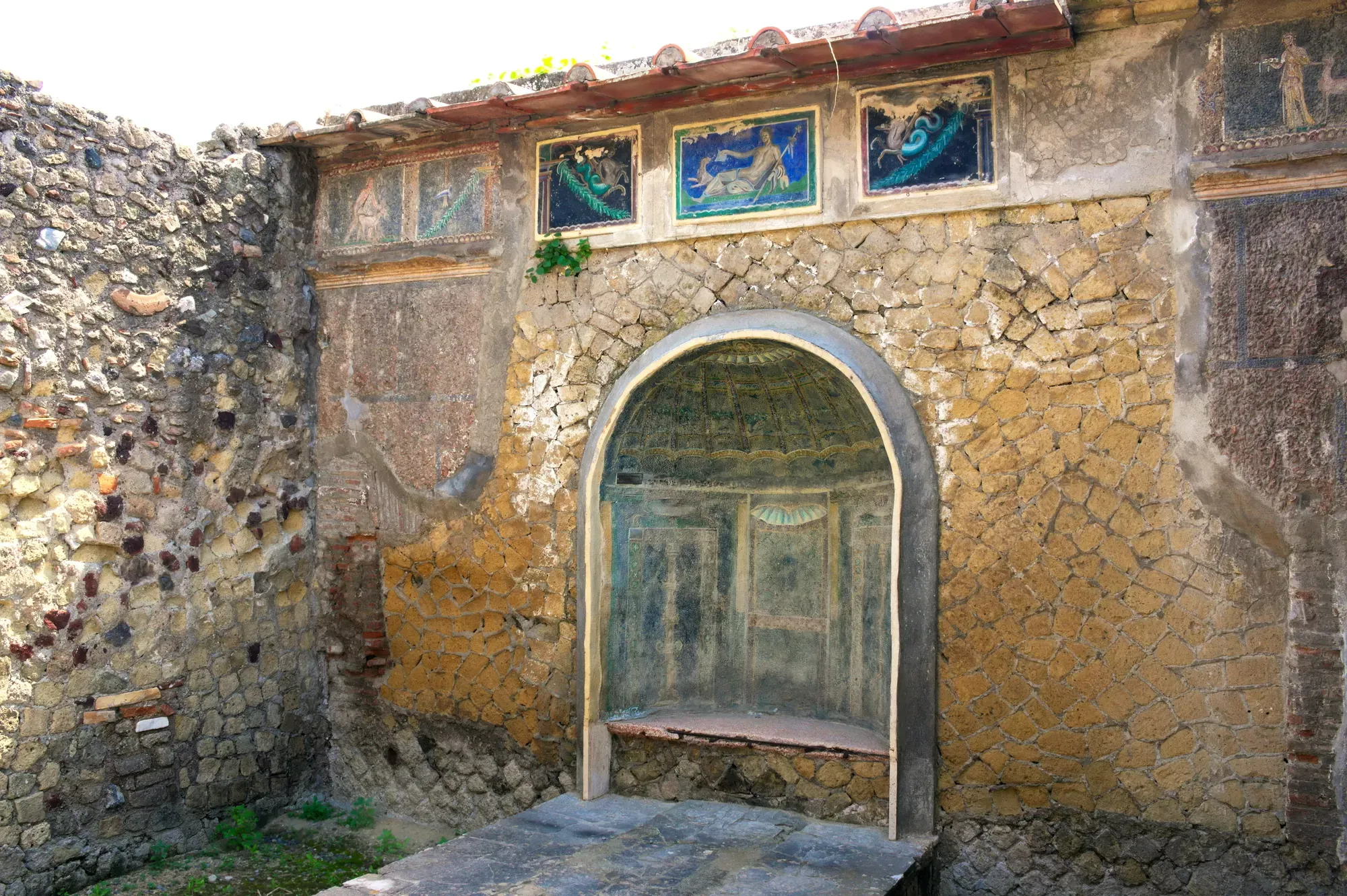
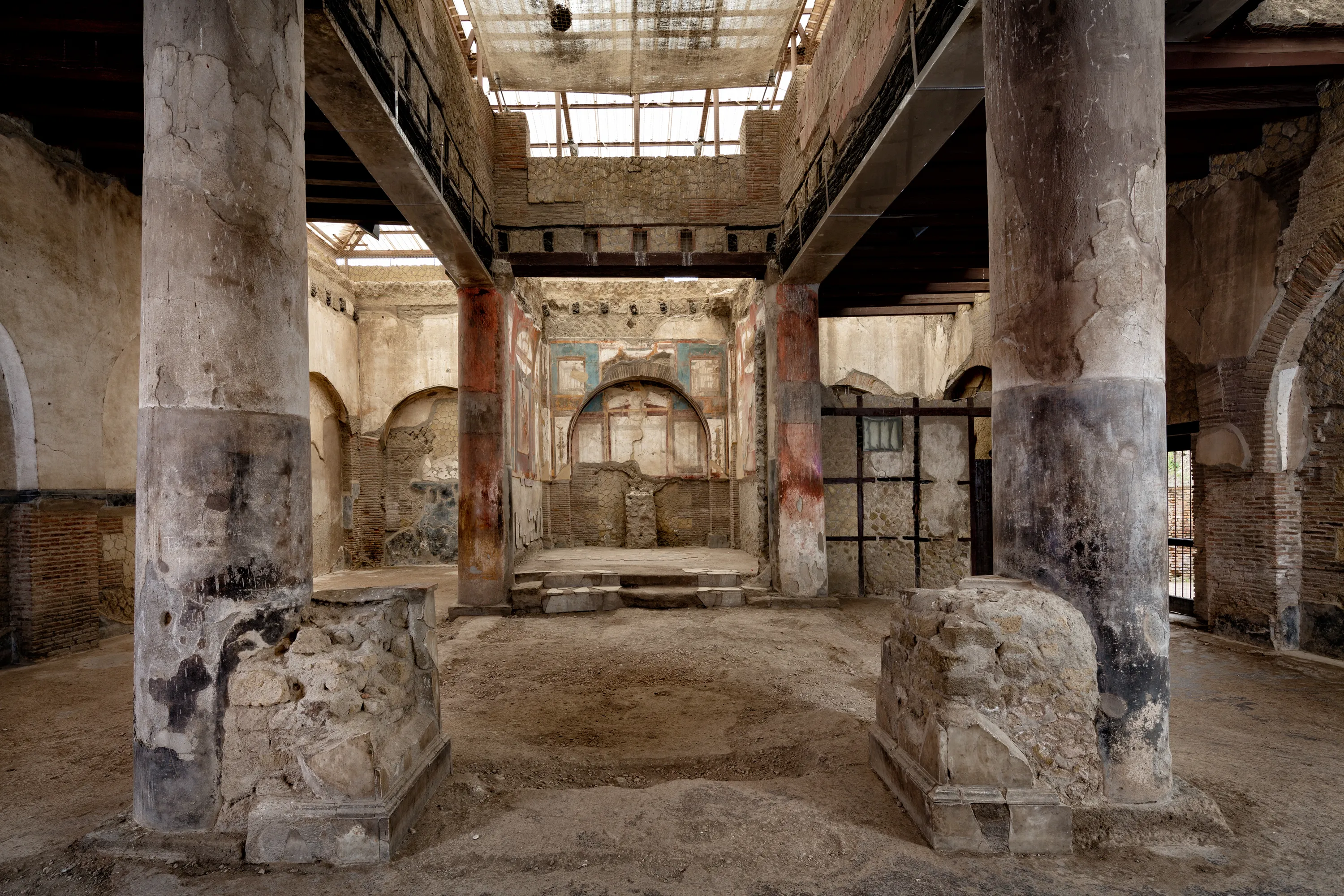
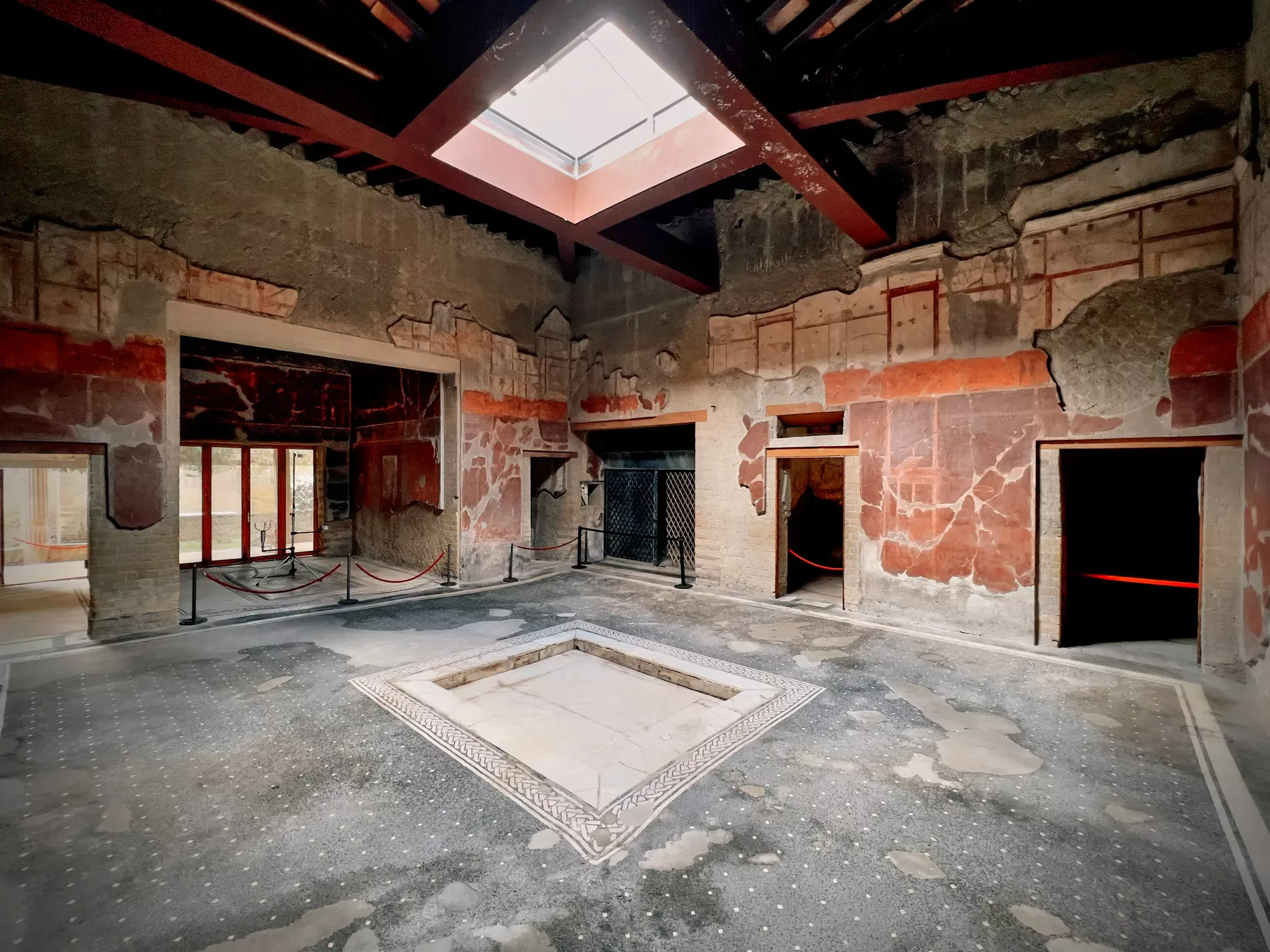
Entering Herculaneum means observing, up close, how a Roman city functioned as a whole. The domus are not simple shells of masonry: they reveal social hierarchies, aesthetic tastes, wealth, family relations, and even the cultural ambitions of their owners. Atriums, peristyles, reception rooms, and service spaces coexist in a remarkable architectural balance, where each area serves a specific purpose. In many houses, painted decorations, mosaic floors, and furnishing details still survive, restoring the tone, light, and quality of ancient private life.
Alongside the domestic world, collective infrastructure also appears clearly: baths, circulation areas, spaces dedicated to commerce, and places of gathering. Walking on worn paving stones, you can sense the frequency of everyday movement, the rhythm of trades, and the organization of neighborhoods. Herculaneum emerges as a fully functioning city, where the distinction between public and private life remains visible and concrete. This urban legibility—rare in many other contexts—is what turns the visit into a genuine open-air lesson in urban history.
Commerce, crafts, and daily life
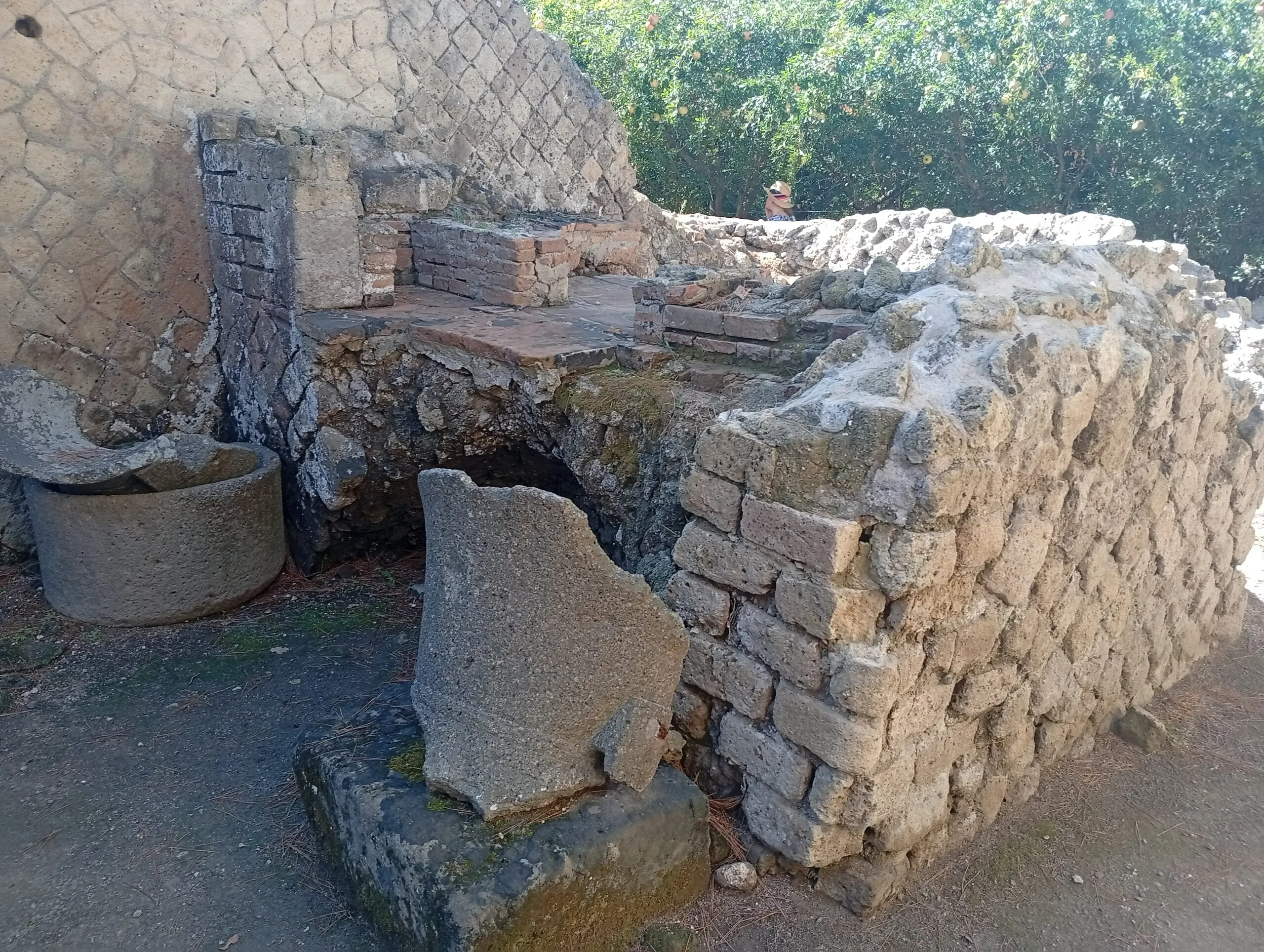
Behind the elegant facades of its best-known houses, Herculaneum reveals a lively economic fabric made of workshops, small laboratories, and local commercial activity. Life here was shaped not only by domestic or religious rituals, but also by labor, exchange, professional relationships, and services to the community. Street-facing fronts, thresholds, counters, and production spaces testify to a concrete everyday economy in which artisans and merchants helped define the city’s dynamic identity.
Looking at these spaces closely, it becomes easy to imagine the sounds, smells, and gestures of an ordinary day: people bargaining, passersby pausing, regular customers, children crossing narrow lanes, enslaved workers and freedmen engaged in different tasks. Herculaneum does not preserve only major historical events; it preserves the normality of ancient life—the part that rarely enters textbooks but forms the true fabric of society. That is why the visit feels so powerful: each stone still seems linked to a personal story.
The AD 79 eruption and its impact on the city
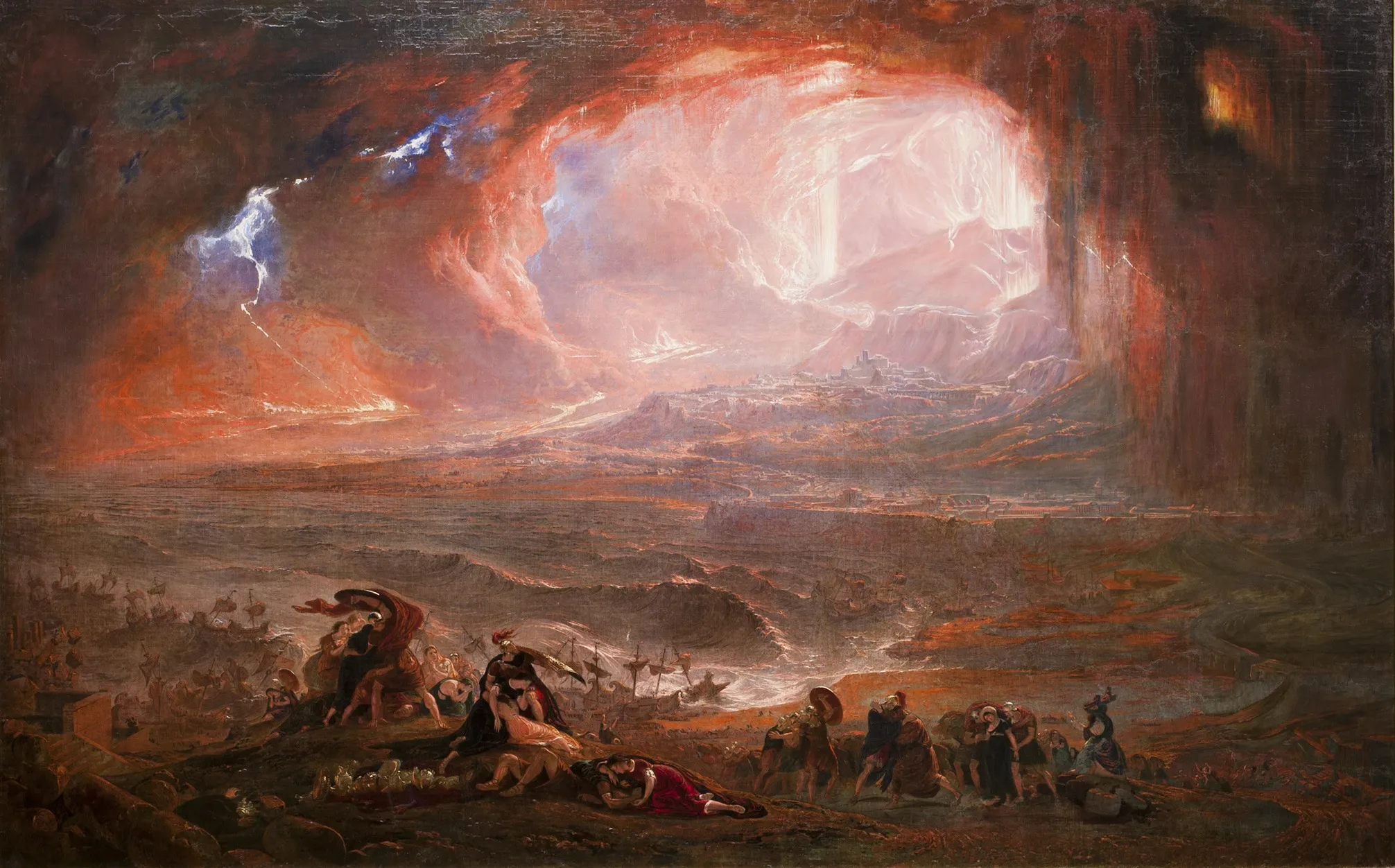
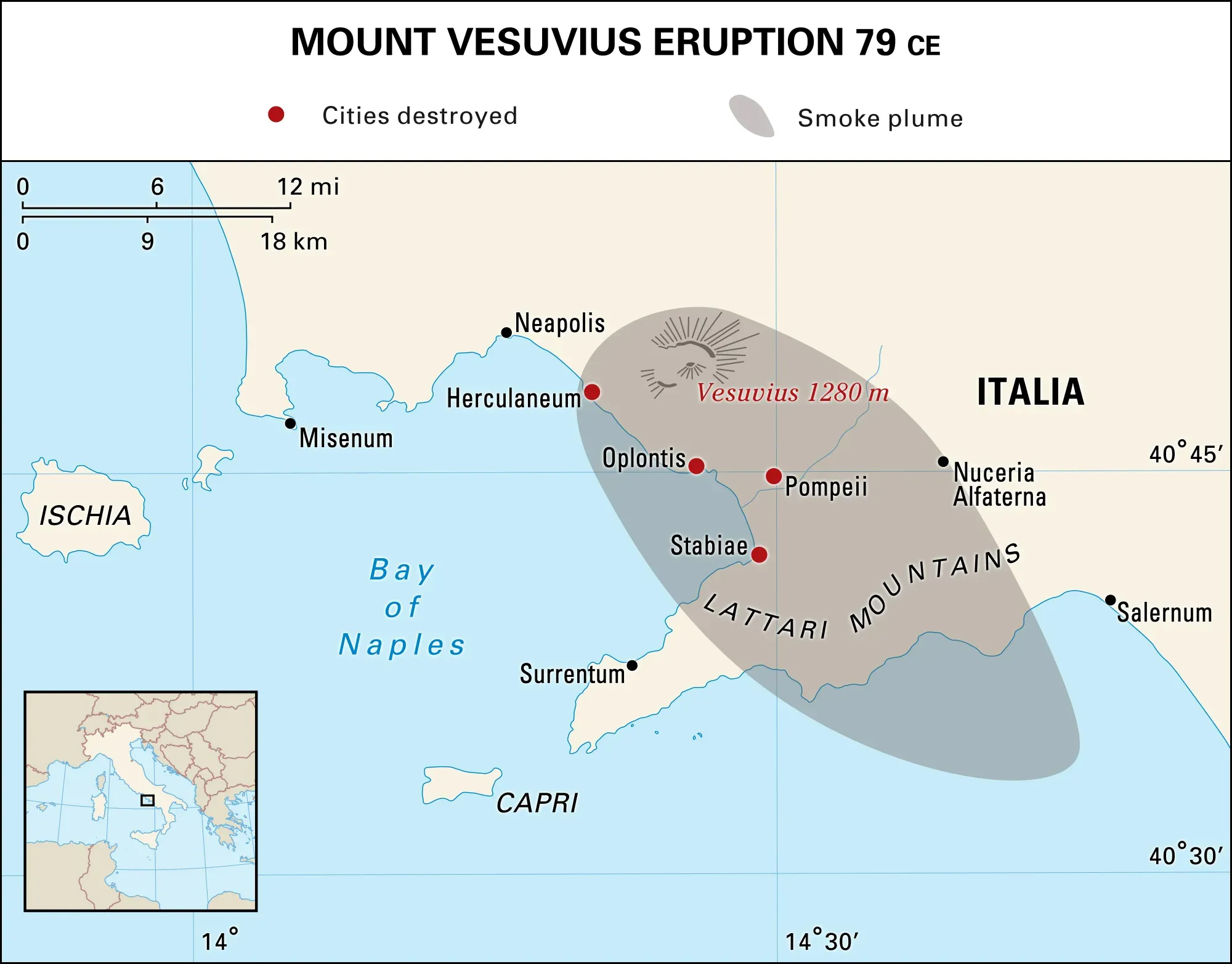
In AD 79, the eruption of Vesuvius transformed Herculaneum’s fate forever. Unlike areas affected mainly by lighter pumice fall, this city was struck by extremely violent pyroclastic flows capable of engulfing the urban fabric within a very short time. The event was devastating and produced dramatic human consequences, yet it also created—tragically and unintentionally—the conditions for exceptional preservation of structures, organic materials, and archaeological contexts.
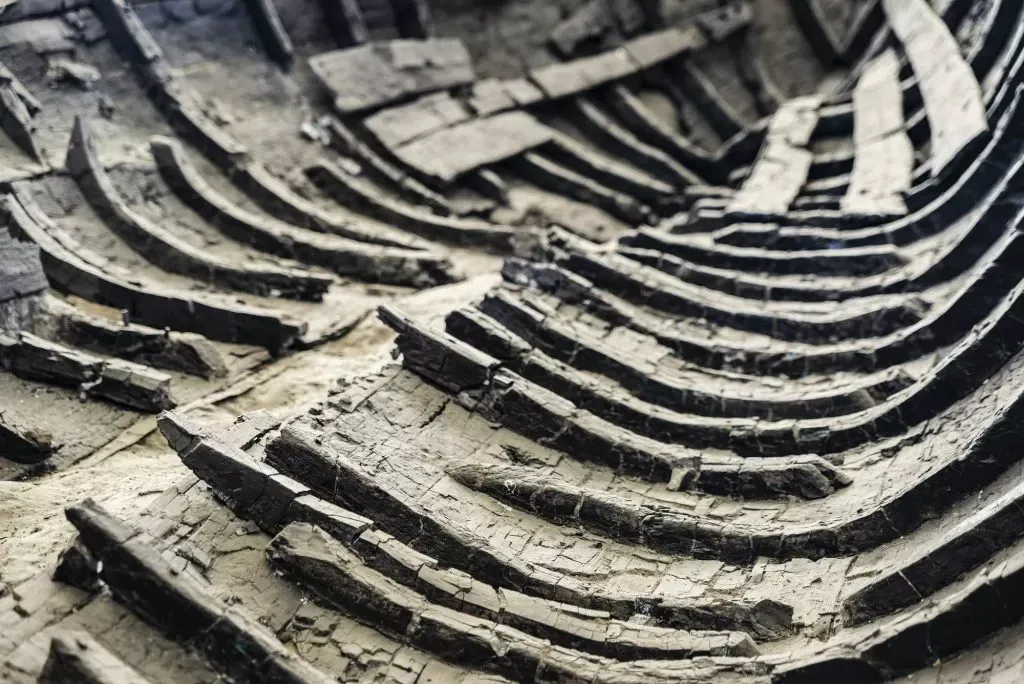
What we observe today is not the outcome of gradual decay, but of a brutal suspension of time. Volcanic layers sealed entire environments, protecting elements that would have disappeared elsewhere: carbonized timber, furnishings, architectural segments, and everyday objects. It is difficult to describe the emotion of realizing that a once-living city was abruptly interrupted. Yet from that interruption comes the possibility of knowing Herculaneum with unusual historical depth.
The long disappearance beneath volcanic deposits
After the eruption, Herculaneum gradually disappeared from the visible memory of the territory. Thick, compact volcanic deposits made the ancient city invisible and inaccessible, while in later centuries the human and urban landscape changed profoundly. Above that sealed world, new activities, homes, and roads developed, in a transformation process that progressively distanced local memory from the original Roman city.
This long phase of oblivion was not only a loss: paradoxically, it also protected Herculaneum from systematic destruction and invasive reuse. When excavations began to bring it back to light, a compact and exceptionally powerful archaeological reality emerged—one capable of narrating not an isolated fragment, but a complex urban organism. Hidden for centuries, the city had remained there, intact in many parts, waiting to be interpreted with new methods and renewed sensitivity.
Rediscovery in the Bourbon era
The rediscovery of Herculaneum in the Bourbon era marks a crucial moment in the history of European archaeology. The first explorations, launched in the eighteenth century, were often driven by the recovery of artworks and prestigious finds intended for royal collections. Initial methods, limited by the knowledge of the time, favored tunnels and targeted extraction rather than systematic documentation of the full urban context.
Over the decades, however, the perspective changed: Herculaneum came to be seen not merely as a source of precious objects, but as a complex historical archive to be studied in its integrity. This methodological shift—common to much of modern archaeology—enabled a move from extraction to understanding, protection, and enhancement. Looking at the results today, one can clearly sense how decisive this cultural transformation has been for the way we read the past.
Modern excavations and archaeological methods
Contemporary archaeology at Herculaneum uses interdisciplinary approaches that combine stratigraphic excavation, digital surveying, material analysis, bioarchaeological studies, and conservation monitoring. The goal is no longer simply to ‘uncover,’ but to interpret every trace with rigor: from masonry composition to organic residues, from water systems to production spaces. Each detail helps construct a more precise and less stereotyped historical narrative.
This methodology allows the public to understand the city even in its more technical dimensions: water supply, functional room distribution, management of shared spaces, and adaptations over time. The result is a much richer reading of the site, where conservation and research continuously support one another. Herculaneum thus becomes not only a fascinating destination, but also an internationally significant scientific laboratory.
The boat chambers and the memory of the victims
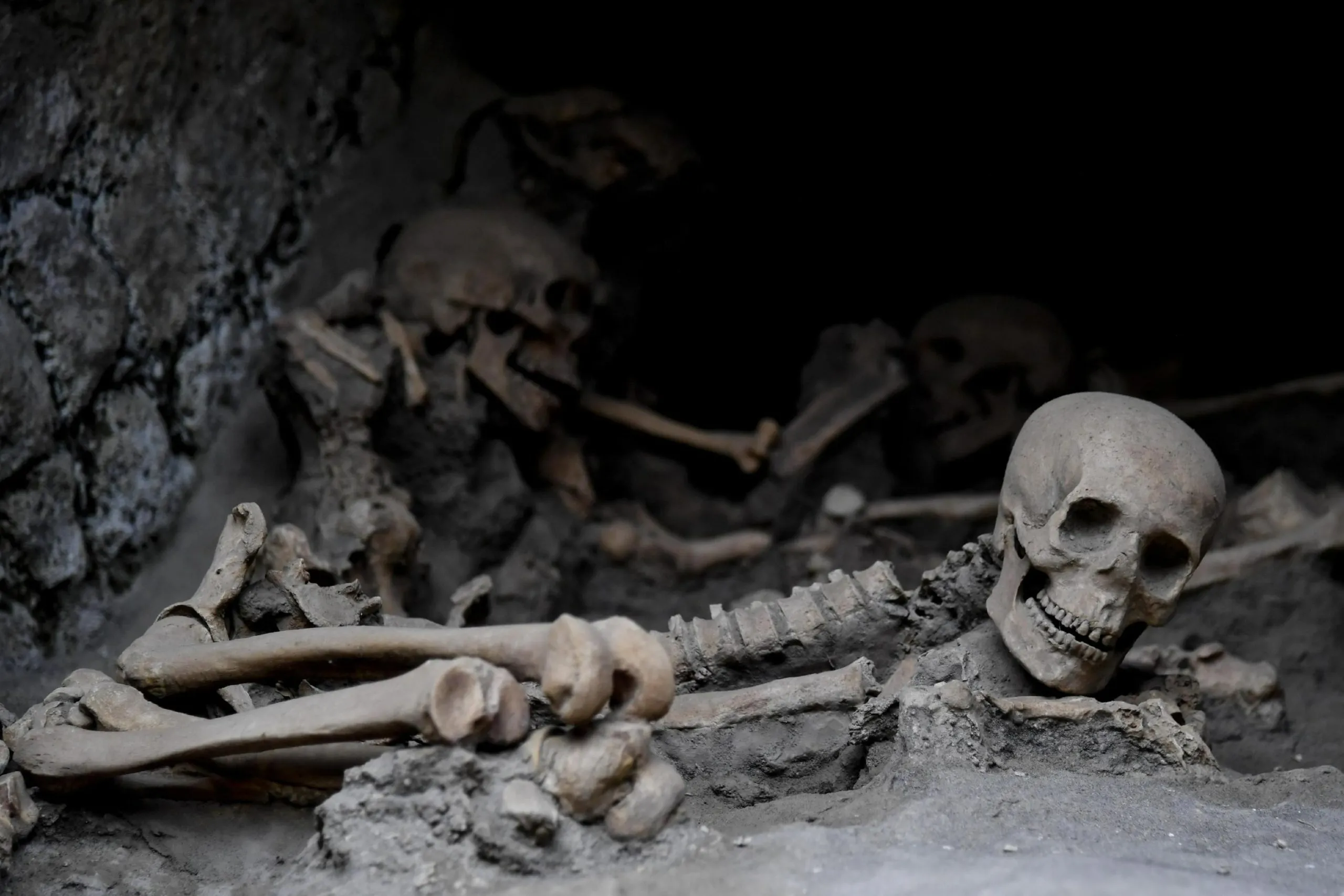
Among the most intense places in the entire archaeological park are the boat chambers, vaulted spaces near the ancient shoreline where human remains linked to the final moments of the eruption were found. Here the tone of the visit changes: it is no longer only the observation of architecture and decoration, but a direct encounter with the human dimension of catastrophe. Evidence gathered over time has enabled rigorous study of age, living conditions, health, and event dynamics.
At the same time, the boat chambers call for a respectful and conscious gaze. They are not ‘attractions’ in the ordinary sense, but spaces of collective memory where archaeology and humanity meet in profound ways. Many visitors say this is where they truly grasp the scale of the eruption: not an abstract event from the past, but a story of real people, families, expectations, and hopes abruptly interrupted.
Frescoes, timber, and exceptional finds
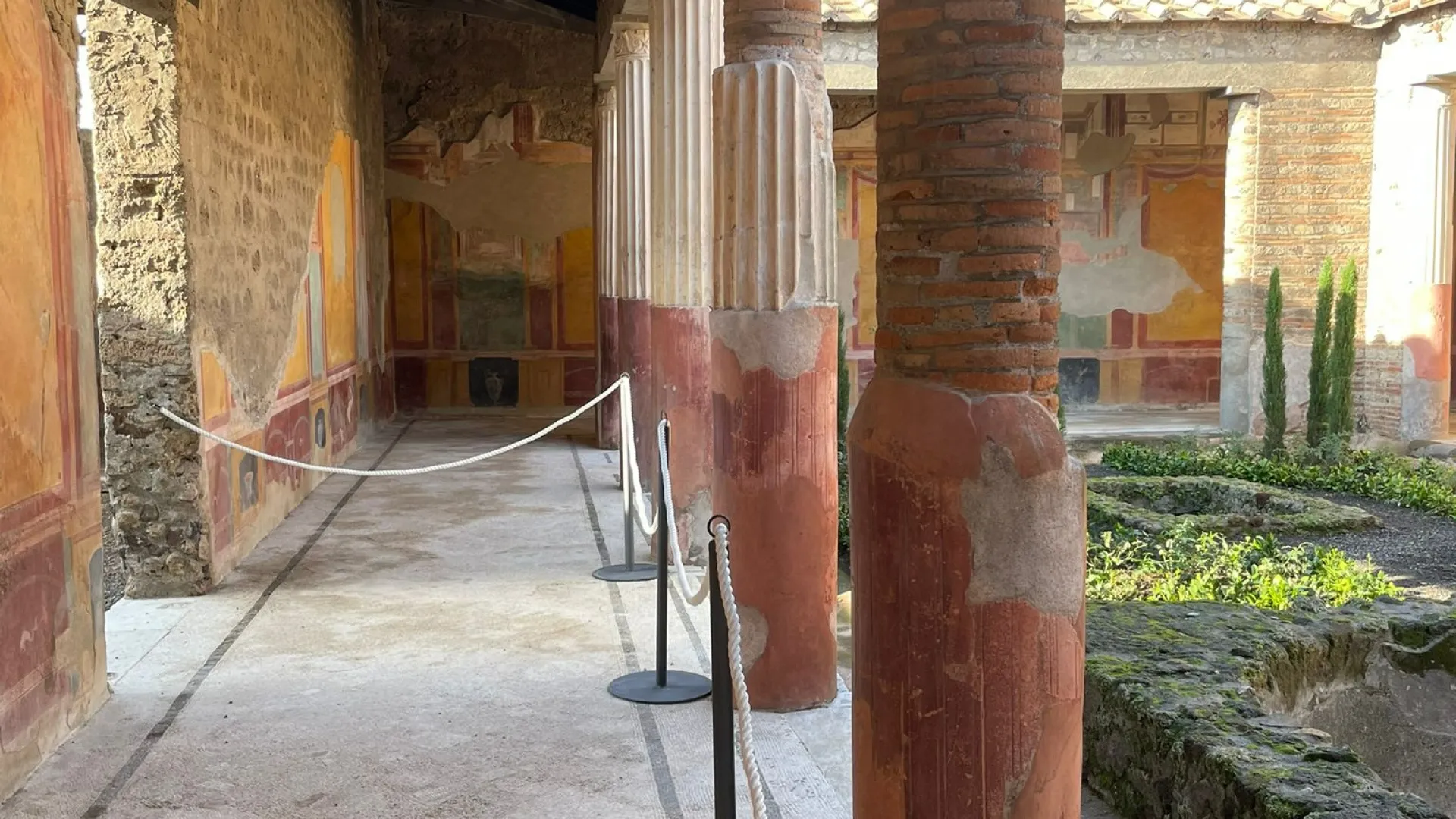
One of Herculaneum’s most extraordinary features is the quality of its preserved materials. Beyond remarkable frescoes and mosaics, the site has yielded carbonized timber, furnishings, and structural components that are almost always lost elsewhere. These finds make it possible to study not only aesthetics and iconography, but also building techniques, interior organization, and the material culture of everyday life.
The presence of organic materials—rare and exceptionally valuable—greatly expands the site’s interpretive potential. Each recovered object is analyzed, contextualized, and often reinterpreted through new technologies. For visitors, this becomes a highly concrete perception of the past: not an idealized world, but a real environment of surfaces, colors, tools, and objects that still feel strikingly immediate today.
How to read Herculaneum during your visit
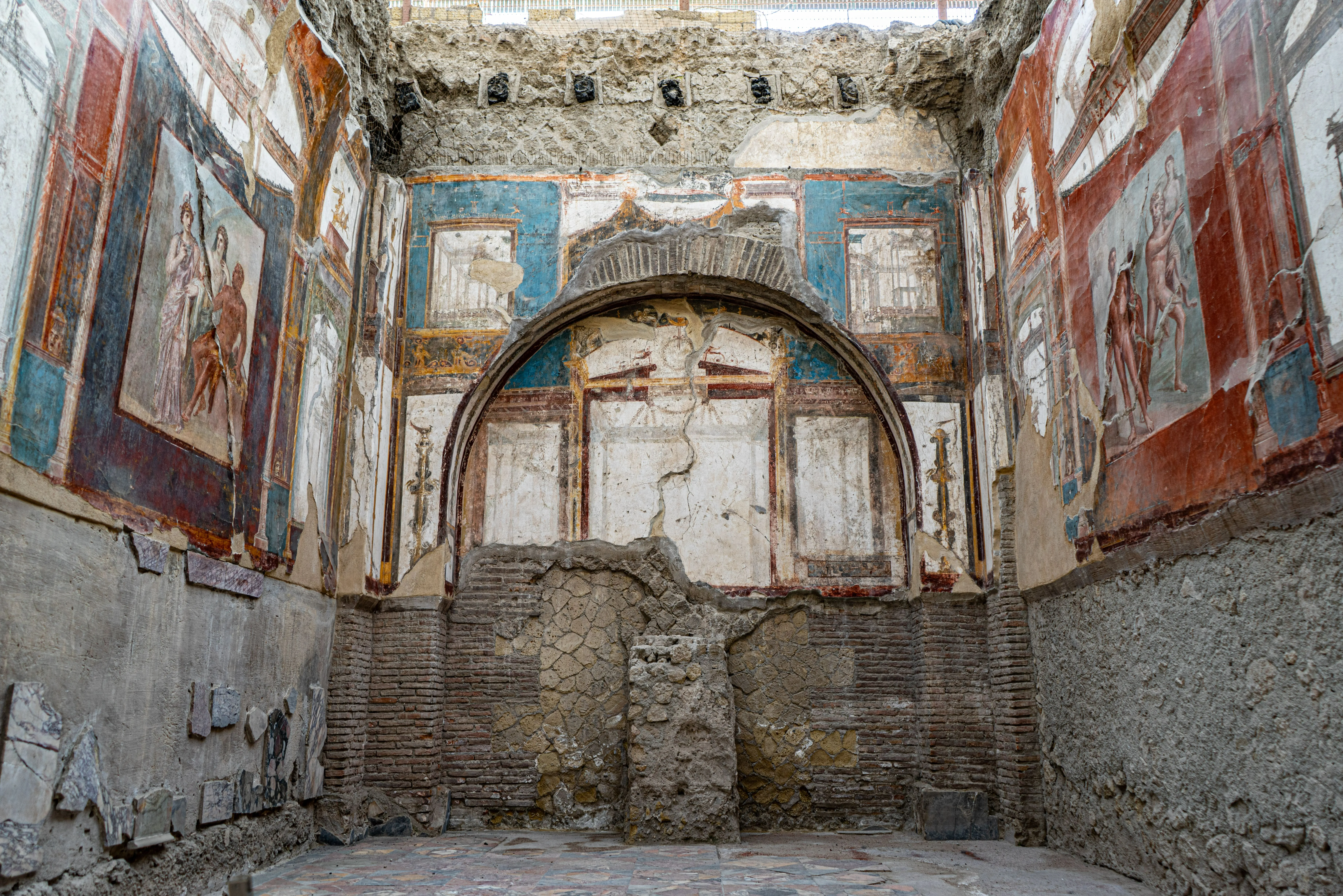
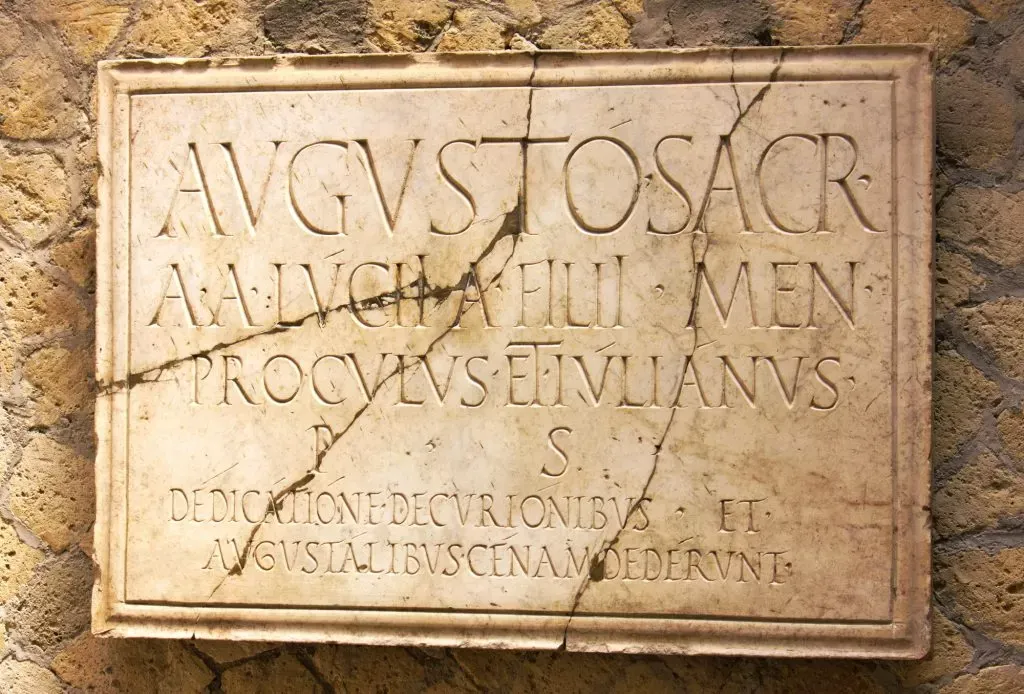
To truly appreciate Herculaneum, adopt a slower pace. Start from the main areas to orient yourself, then choose a few domus to observe more carefully, looking for connections between private spaces, streets, and public areas. Do not limit yourself to the most famous points: often the smaller details—an inscription, a worn threshold, a service room—reveal decisive aspects of ancient life.
If possible, pair your independent visit with an expert guide or a high-quality audio resource: this helps clarify chronology, urban transformations, and social differences that are not immediately visible. Herculaneum rewards patient observation. The more time you spend reading its spaces, the more the site stops feeling like a collection of ruins and becomes, in your mind, a city that can be inhabited again.
Conservation, protection, and research today
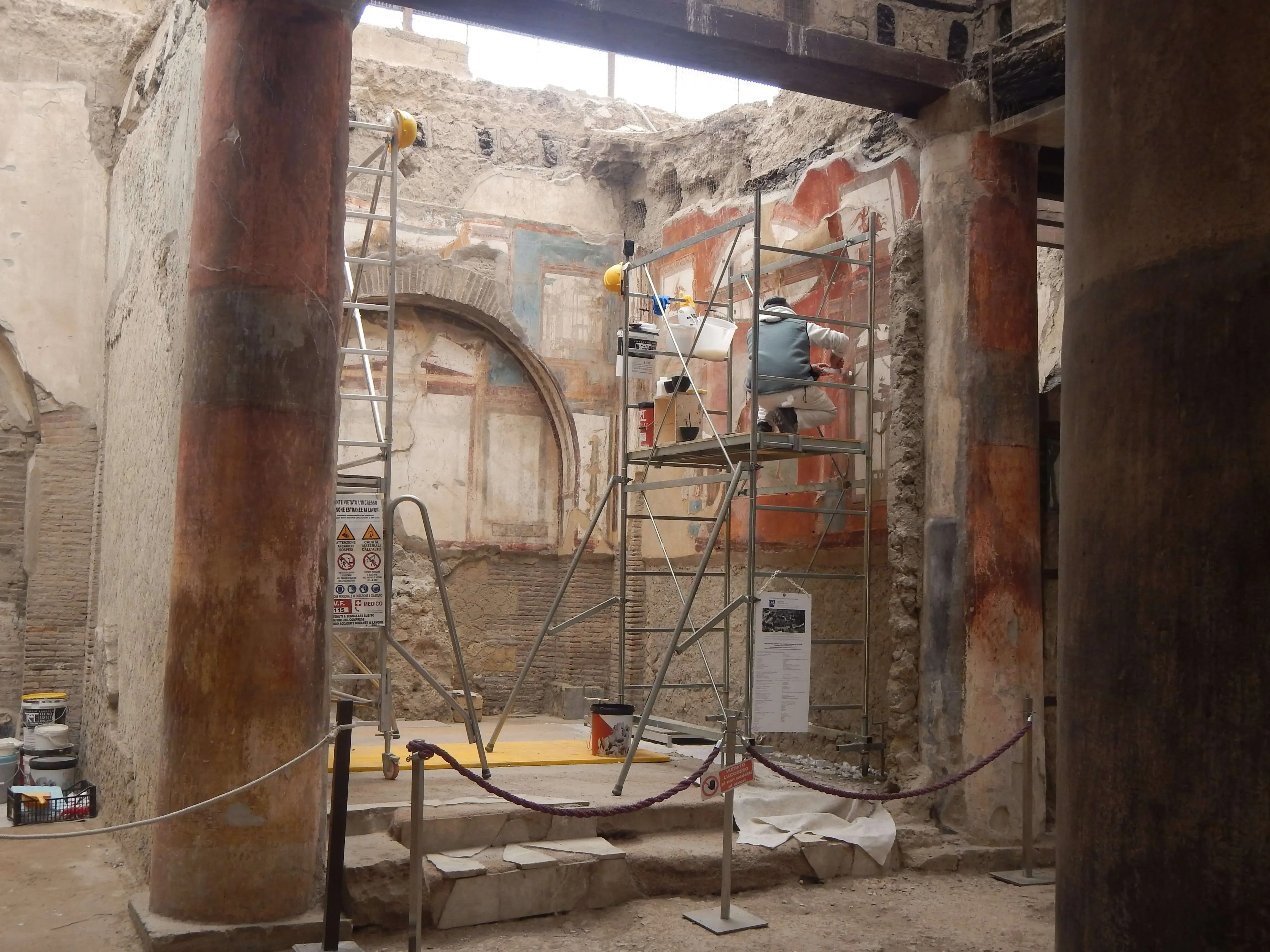
Protecting Herculaneum is an ongoing challenge requiring multidisciplinary expertise, constant investment, and long-term planning. Exposure to weather, the fragility of certain ancient surfaces, and intense tourist flows all demand targeted interventions and regular monitoring. Conservation does not mean ‘freezing’ the site; it means guiding its balance over time through carefully considered technical decisions.
In this process, collaboration among institutions, restorers, archaeologists, and the international scientific community is essential. Herculaneum is a shared heritage that speaks not only to the past, but also to the present: it shows how a society handles memory, care, and responsibility toward cultural assets. Every informed visit that respects park rules contributes concretely to this mission.
Herculaneum and the Vesuvian landscape
Herculaneum cannot be fully understood without its landscape: Vesuvius behind it, the sea nearby, and the modern urban belt that now surrounds the archaeological zone. This relationship between nature, history, and contemporary city life makes the visit particularly evocative. Walking among ancient remains, you feel the geological force that shaped the territory and, at the same time, the human continuity that has always sought to inhabit and reinterpret it.
For many travelers, combining Herculaneum with other Vesuvian sites—such as Pompeii, Oplontis, or the Great Cone of Vesuvius—helps build a more complete view of the historical and environmental context. Each site narrates a different chapter of the same story: city, eruption, memory, and renewal. In this mosaic, Herculaneum stands out for its intimacy and narrative precision.
Why Herculaneum still moves people
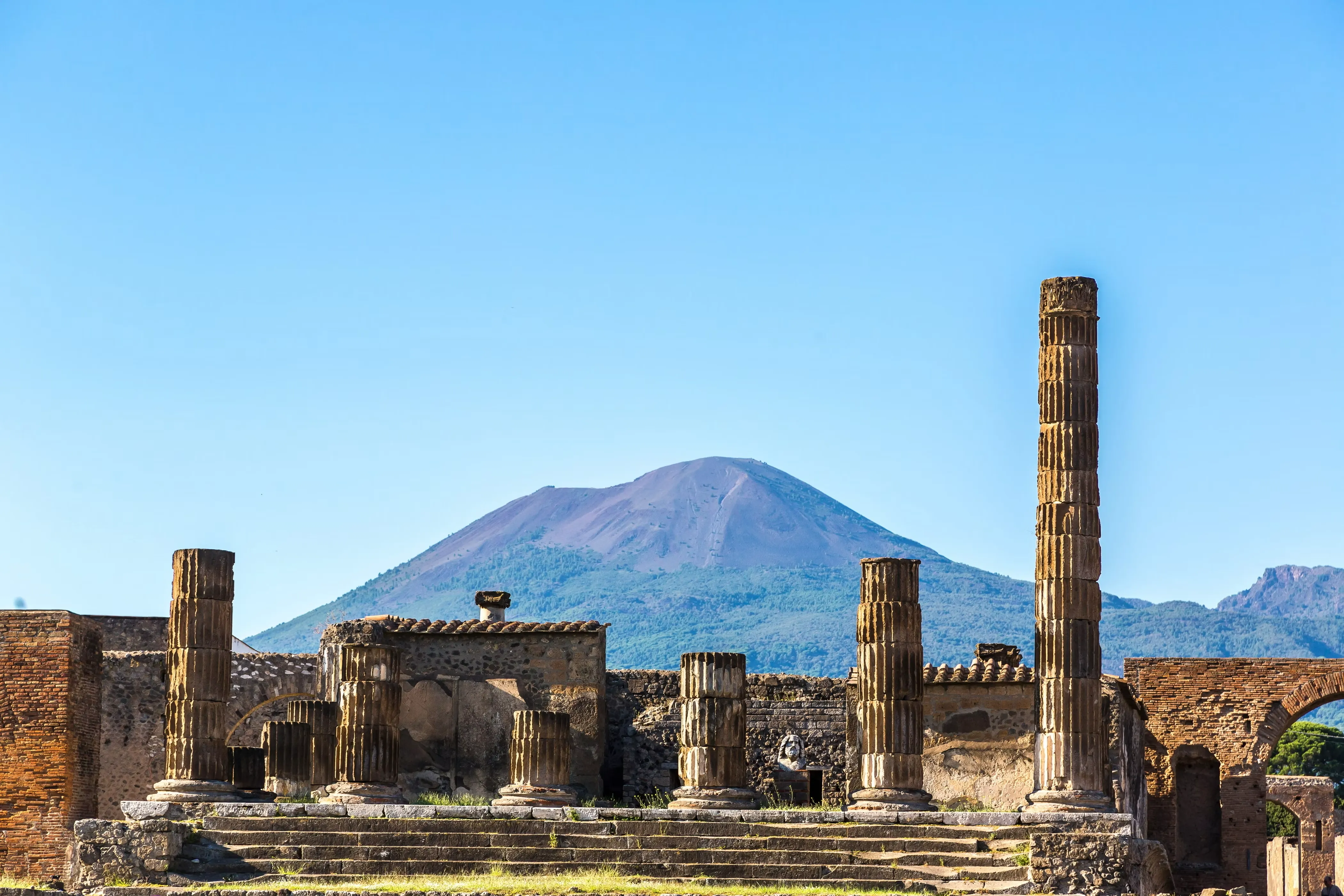
Herculaneum moves people because it shortens the distance between us and antiquity. Here you do not merely observe grand monuments: you enter homes, cross intersections, recognize workspaces, and imagine everyday conversations. The ancient city appears not as a glorious abstraction, but as a concrete community made of ordinary choices and aspirations similar to our own. More than any other element, this human dimension is what makes the visit unforgettable.
At the end of the route, a double feeling often remains: wonder for what survived and respect for what was lost. Herculaneum teaches that the past is not a closed chapter, but a continuous dialogue with the present. And perhaps this is its most powerful message: understanding who we were, so we can see more clearly who we are today.
Table of Contents
The origins of ancient Herculaneum
The origins of Herculaneum are intertwined with the earliest history of the Gulf of Naples, a region where different peoples left deep traces long before Roman expansion. Ancient sources associate the city’s foundation with mythic and heroic traditions, yet beyond legend a concrete reality emerges: Herculaneum was born in a strategic location, close to the sea and along vital commercial routes. This allowed it to grow as an active center, with a community able to absorb diverse cultural influences and transform them into a distinct urban identity.
When Rome consolidated control over Campania, Herculaneum entered a phase of gradual political, economic, and social integration. The most influential local families adopted Roman architectural models and lifestyles, while the city retained a relatively compact scale, unlike the monumental character of larger provincial capitals. This human dimension—still visible today in the street grid and in the quality of the houses—is what makes Herculaneum extraordinary: history here does not feel distant, but near, almost domestic, shaped by real people and everyday gestures that time, paradoxically, preserved.
The Roman city between houses and public spaces
Entering Herculaneum means observing, up close, how a Roman city functioned as a whole. The domus are not simple shells of masonry: they reveal social hierarchies, aesthetic tastes, wealth, family relations, and even the cultural ambitions of their owners. Atriums, peristyles, reception rooms, and service spaces coexist in a remarkable architectural balance, where each area serves a specific purpose. In many houses, painted decorations, mosaic floors, and furnishing details still survive, restoring the tone, light, and quality of ancient private life.
Alongside the domestic world, collective infrastructure also appears clearly: baths, circulation areas, spaces dedicated to commerce, and places of gathering. Walking on worn paving stones, you can sense the frequency of everyday movement, the rhythm of trades, and the organization of neighborhoods. Herculaneum emerges as a fully functioning city, where the distinction between public and private life remains visible and concrete. This urban legibility—rare in many other contexts—is what turns the visit into a genuine open-air lesson in urban history.
Commerce, crafts, and daily life
Behind the elegant facades of its best-known houses, Herculaneum reveals a lively economic fabric made of workshops, small laboratories, and local commercial activity. Life here was shaped not only by domestic or religious rituals, but also by labor, exchange, professional relationships, and services to the community. Street-facing fronts, thresholds, counters, and production spaces testify to a concrete everyday economy in which artisans and merchants helped define the city’s dynamic identity.
Looking at these spaces closely, it becomes easy to imagine the sounds, smells, and gestures of an ordinary day: people bargaining, passersby pausing, regular customers, children crossing narrow lanes, enslaved workers and freedmen engaged in different tasks. Herculaneum does not preserve only major historical events; it preserves the normality of ancient life—the part that rarely enters textbooks but forms the true fabric of society. That is why the visit feels so powerful: each stone still seems linked to a personal story.
The AD 79 eruption and its impact on the city
In AD 79, the eruption of Vesuvius transformed Herculaneum’s fate forever. Unlike areas affected mainly by lighter pumice fall, this city was struck by extremely violent pyroclastic flows capable of engulfing the urban fabric within a very short time. The event was devastating and produced dramatic human consequences, yet it also created—tragically and unintentionally—the conditions for exceptional preservation of structures, organic materials, and archaeological contexts.
What we observe today is not the outcome of gradual decay, but of a brutal suspension of time. Volcanic layers sealed entire environments, protecting elements that would have disappeared elsewhere: carbonized timber, furnishings, architectural segments, and everyday objects. It is difficult to describe the emotion of realizing that a once-living city was abruptly interrupted. Yet from that interruption comes the possibility of knowing Herculaneum with unusual historical depth.
The long disappearance beneath volcanic deposits
After the eruption, Herculaneum gradually disappeared from the visible memory of the territory. Thick, compact volcanic deposits made the ancient city invisible and inaccessible, while in later centuries the human and urban landscape changed profoundly. Above that sealed world, new activities, homes, and roads developed, in a transformation process that progressively distanced local memory from the original Roman city.
This long phase of oblivion was not only a loss: paradoxically, it also protected Herculaneum from systematic destruction and invasive reuse. When excavations began to bring it back to light, a compact and exceptionally powerful archaeological reality emerged—one capable of narrating not an isolated fragment, but a complex urban organism. Hidden for centuries, the city had remained there, intact in many parts, waiting to be interpreted with new methods and renewed sensitivity.
Rediscovery in the Bourbon era
The rediscovery of Herculaneum in the Bourbon era marks a crucial moment in the history of European archaeology. The first explorations, launched in the eighteenth century, were often driven by the recovery of artworks and prestigious finds intended for royal collections. Initial methods, limited by the knowledge of the time, favored tunnels and targeted extraction rather than systematic documentation of the full urban context.
Over the decades, however, the perspective changed: Herculaneum came to be seen not merely as a source of precious objects, but as a complex historical archive to be studied in its integrity. This methodological shift—common to much of modern archaeology—enabled a move from extraction to understanding, protection, and enhancement. Looking at the results today, one can clearly sense how decisive this cultural transformation has been for the way we read the past.
Modern excavations and archaeological methods
Contemporary archaeology at Herculaneum uses interdisciplinary approaches that combine stratigraphic excavation, digital surveying, material analysis, bioarchaeological studies, and conservation monitoring. The goal is no longer simply to ‘uncover,’ but to interpret every trace with rigor: from masonry composition to organic residues, from water systems to production spaces. Each detail helps construct a more precise and less stereotyped historical narrative.
This methodology allows the public to understand the city even in its more technical dimensions: water supply, functional room distribution, management of shared spaces, and adaptations over time. The result is a much richer reading of the site, where conservation and research continuously support one another. Herculaneum thus becomes not only a fascinating destination, but also an internationally significant scientific laboratory.
The boat chambers and the memory of the victims
Among the most intense places in the entire archaeological park are the boat chambers, vaulted spaces near the ancient shoreline where human remains linked to the final moments of the eruption were found. Here the tone of the visit changes: it is no longer only the observation of architecture and decoration, but a direct encounter with the human dimension of catastrophe. Evidence gathered over time has enabled rigorous study of age, living conditions, health, and event dynamics.
At the same time, the boat chambers call for a respectful and conscious gaze. They are not ‘attractions’ in the ordinary sense, but spaces of collective memory where archaeology and humanity meet in profound ways. Many visitors say this is where they truly grasp the scale of the eruption: not an abstract event from the past, but a story of real people, families, expectations, and hopes abruptly interrupted.
Frescoes, timber, and exceptional finds
One of Herculaneum’s most extraordinary features is the quality of its preserved materials. Beyond remarkable frescoes and mosaics, the site has yielded carbonized timber, furnishings, and structural components that are almost always lost elsewhere. These finds make it possible to study not only aesthetics and iconography, but also building techniques, interior organization, and the material culture of everyday life.
The presence of organic materials—rare and exceptionally valuable—greatly expands the site’s interpretive potential. Each recovered object is analyzed, contextualized, and often reinterpreted through new technologies. For visitors, this becomes a highly concrete perception of the past: not an idealized world, but a real environment of surfaces, colors, tools, and objects that still feel strikingly immediate today.
How to read Herculaneum during your visit
To truly appreciate Herculaneum, adopt a slower pace. Start from the main areas to orient yourself, then choose a few domus to observe more carefully, looking for connections between private spaces, streets, and public areas. Do not limit yourself to the most famous points: often the smaller details—an inscription, a worn threshold, a service room—reveal decisive aspects of ancient life.
If possible, pair your independent visit with an expert guide or a high-quality audio resource: this helps clarify chronology, urban transformations, and social differences that are not immediately visible. Herculaneum rewards patient observation. The more time you spend reading its spaces, the more the site stops feeling like a collection of ruins and becomes, in your mind, a city that can be inhabited again.
Conservation, protection, and research today
Protecting Herculaneum is an ongoing challenge requiring multidisciplinary expertise, constant investment, and long-term planning. Exposure to weather, the fragility of certain ancient surfaces, and intense tourist flows all demand targeted interventions and regular monitoring. Conservation does not mean ‘freezing’ the site; it means guiding its balance over time through carefully considered technical decisions.
In this process, collaboration among institutions, restorers, archaeologists, and the international scientific community is essential. Herculaneum is a shared heritage that speaks not only to the past, but also to the present: it shows how a society handles memory, care, and responsibility toward cultural assets. Every informed visit that respects park rules contributes concretely to this mission.
Herculaneum and the Vesuvian landscape
Herculaneum cannot be fully understood without its landscape: Vesuvius behind it, the sea nearby, and the modern urban belt that now surrounds the archaeological zone. This relationship between nature, history, and contemporary city life makes the visit particularly evocative. Walking among ancient remains, you feel the geological force that shaped the territory and, at the same time, the human continuity that has always sought to inhabit and reinterpret it.
For many travelers, combining Herculaneum with other Vesuvian sites—such as Pompeii, Oplontis, or the Great Cone of Vesuvius—helps build a more complete view of the historical and environmental context. Each site narrates a different chapter of the same story: city, eruption, memory, and renewal. In this mosaic, Herculaneum stands out for its intimacy and narrative precision.
Why Herculaneum still moves people
Herculaneum moves people because it shortens the distance between us and antiquity. Here you do not merely observe grand monuments: you enter homes, cross intersections, recognize workspaces, and imagine everyday conversations. The ancient city appears not as a glorious abstraction, but as a concrete community made of ordinary choices and aspirations similar to our own. More than any other element, this human dimension is what makes the visit unforgettable.
At the end of the route, a double feeling often remains: wonder for what survived and respect for what was lost. Herculaneum teaches that the past is not a closed chapter, but a continuous dialogue with the present. And perhaps this is its most powerful message: understanding who we were, so we can see more clearly who we are today.